
I used to think bloating after eating was just… normal. My pre-lunch maandazi. My post-dinner discomfort. The afternoon fog that made me want to crawl under my desk. I chalked it all up to stress, busy schedules, or just getting older.
What I didn’t realise was that the flour sitting in my pantry, the one I’d used for everything from chapati to pancakes, was quietly working against me.
Then I made one small swap. And it changed everything.
The Swap That Started It All
It wasn’t a dramatic overhaul. I didn’t clear out my kitchen or go on a detox. I simply ran out of wheat flour one Sunday morning, found a bag of chickpea flour (also called besan or garbanzo flour) at the back of my shelf, and made my pancakes with it instead.
The texture was slightly denser. The flavour had a subtle nuttiness I actually loved. But what really got my attention? I didn’t bloat. Not even a little.
That was over a year ago. I haven’t looked back since.
What Is Chickpea Flour, Exactly?
Chickpea flour is simply dried chickpeas ground into a fine powder. It’s been a staple in South Asian, Middle Eastern, and Mediterranean cooking for centuries, used in everything from socca flatbreads to Indian pakoras to Burmese tofu.
It looks similar to wheat flour, behaves reasonably well as a substitute in many recipes, and packs a nutritional profile that wheat flour simply can’t match.
Why Chickpea Flour Is a Hormone Health Game-Changer
1. It’s High in Protein and Fibre; Two Things Your Hormones Love
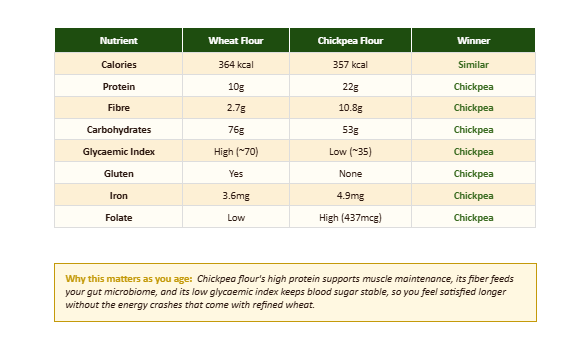
A single cup of chickpea flour contains roughly 20g of protein and 10g of fibre. That combination does something powerful for your hormones: it stabilises blood sugar.
When blood sugar spikes and crashes repeatedly, which refined wheat flour is notorious for triggering, your body pumps out cortisol and disrupts insulin sensitivity. Over time, that cycle contributes to hormonal imbalances, weight fluctuations, mood swings, and irregular cycles.
Chickpea flour helps keep blood sugar steady, which means more balanced energy, fewer cravings, and a more regulated hormonal environment overall.
2. It Supports Gut Health (Which Is Foundational for Hormones)
Here’s something most people don’t realise: your gut is where a significant portion of oestrogen metabolism happens. If your gut is sluggish or inflamed, excess oestrogen can get reabsorbed into the bloodstream instead of being properly eliminated, contributing to symptoms like PMS, heavy periods, or hormonal acne.
Chickpea flour is rich in prebiotic fibre that feeds the beneficial bacteria in your gut. A healthier gut microbiome means better hormone clearance, less inflammation, and improved overall wellbeing.
Wheat flour — especially refined white flour — can do the opposite for many women, feeding inflammatory pathways and disrupting the delicate gut lining.
3. It’s Naturally Gluten-Free
Gluten sensitivity exists on a broad spectrum. You don’t need a coeliac diagnosis to feel the effects of gluten on your body. Many women experience bloating, skin flare-ups, joint discomfort, or brain fog as a response to gluten, without ever connecting it to their flour.
Chickpea flour is completely gluten-free, making it a gentler option for your digestive system and immune response.
4. It’s Packed With Micronutrients That Support Hormonal Health
Chickpea flour is a source of folate, iron, magnesium, and zinc — all nutrients that play direct roles in hormone production and regulation. Magnesium in particular is one of the most depleted minerals in women dealing with stress, PMS, or period pain. Getting more of it through everyday foods (rather than supplements alone) makes a real difference.
5. It Keeps You Fuller for Longer
Because chickpea flour is higher in protein and slower to digest than wheat flour, it supports satiety in a way that refined flour simply doesn’t. Fewer energy crashes. Fewer cravings for something sweet an hour after eating. More consistent energy across the day.
How I Use It (Without Compromising on Taste)
I was nervous at first that my food would taste like health food, you know, that slightly cardboard quality that makes you feel virtuous but vaguely sad. That’s not the case with chickpea flour.
Here’s what I now make regularly with it:
- Savoury crepes and wraps — chickpea flour batter makes incredible thin flatbreads that hold fillings beautifully
- Fritters and vegetable pancakes — the flour binds brilliantly without eggs
- Thickening sauces and soups — a spoonful adds creaminess and protein without changing flavour
- Baked goods — I blend it 50/50 with another gluten-free flour (like oat or rice flour) for muffins and quick breads
The key is to not substitute 1:1 in every recipe right away. Start with savoury dishes, that’s where chickpea flour really shines, and work your way into baking as you get familiar with it.
A Note on Realistic Expectations
Swapping flour won’t fix everything overnight. Hormonal health is a complex interplay of sleep, stress, nutrition, movement, and so much more. But food is the foundation and small, sustainable swaps in what you eat daily add up to real change over time.
The bloating I used to experience after nearly every meal? Gone. The energy dip after lunch? Significantly reduced. My skin? Calmer. These shifts didn’t happen because I did anything dramatic. They happened because I started paying attention to what everyday ingredients were doing to my body.
Ready to Make the Swap?
If this resonates with you, I’ve put together a free Flour Swap Guide that walks you through exactly how to substitute chickpea flour into your favourite everyday recipes, including the ratios that actually work, which dishes to try first, and what to watch out for.
Download the free swap guide here → [Chickpea Flour]
It’s a simple, practical starting point. Because the best changes aren’t the ones that overhaul your whole life — they’re the ones you can actually stick to.
Small swaps. Real results. That’s what we’re about here.


